Dr Karl Shuker's Official Website - http://www.karlshuker.com/index.htm

IMPORTANT:
To view a complete, regularly-updated listing of my Shuker In MovieLand blog's articles (each one instantly clickable), please click HERE!

IMPORTANT:

To view a complete, regularly-updated listing of my ShukerNature blog's articles (each one instantly clickable), please click HERE!

IMPORTANT:
To view a complete, regularly-updated listing of my RebelBikerDude's AI Biker Art's thematic text & picture galleties (each one instantly clickable), please click HERE!

IMPORTANT:
To view a complete, regularly-updated listing of my Starsteeds blog's poetry and other lyrical writings (each one instantly clickable), please click HERE!

IMPORTANT:
To view a complete, regularly-updated listing of my Eclectarium blog's articles (each one instantly clickable), please click HERE!


Search This Blog


Saturday, May 29, 2021

ALIEN AUTOPSY

 
The official UK DVD of Alien Autopsy (© Jonny Campbell/Ealing Studios/Fragile Films/Warner Bros Pictures – reproduced here on a strictly non-commercial Fair Use basis for educational/review purposes only)

My movie DVD viewing on 27 May 2021 was the docu-comedy movie Alien Autopsy, in which the extraordinary saga of the controversial Ray Santilli/Alien Autopsy footage was reconstructed.

Hitting the world's headlines in August 1995 when it was publicly screened globally on TV (click here to view it on YouTube; NB – age verification is required by Google), this silent b/w 17-minute footage allegedly constituted the filmed autopsy in 1947 at a secret American military base of a dead alien entity lately retrieved from a crashed spacecraft at Roswell, New Mexico. However, the footage was later revealed to be a hoax, or, as Santilli claimed in 2006, a staged recreation of some genuine footage from 1947 that he had viewed and purchased while visiting the USA in 1992, but which had subsequently deteriorated chemically to the point of becoming completely unwatchable.

Directed by Jonny Campbell, and released by Warner Bros Pictures in 2006, Alien Autopsy stars in their movie debuts those two Geordie rascals Ant (McPartlin) & Dec (Donnelly). If I'm honest, I wasn't expecting a great deal, as my own prior familiarity with this British TV duo's work as adults had tended to involve their reading off autocues and looking rather pleased with themselves, with Ant's default TV persona being the more adventurous, cheeky, outward-going member of the pair, and Dec's being the more reined-in, precise, uptight member.

Consequently, I was taken totally by surprise to discover that in this movie they completely reverse these tried and trusted roles, with Dec playing Santilli as an unshaven, risk-taking wide boy (in reality he is a TV and record producer) and Ant playing his law student friend and collaborator Gary Shoefield (in reality a TV producer) as a very cautious, punctiliously methodical, absolute non-risk-taker who is only very reluctantly drawn into the Alien Autopsy footage affair by Santilli. And what's more, it works!

Dec in particular is a revelation, totally believable in this wholly atypical role for him. So much so, in fact, that from now on, whenever I see him standing on the right of Ant on stage delivering some well-rehearsed lines from an off-camera 'idiot board' (as they call autocues in the States), I shall never not be able to see his stubble-faced wheeler-dealer Santilli alter ego lurking just beneath his clean-shaven face, ready at any moment to break through and regale Ant with another dodgy deal. Moreover, in a noteworthy departure from their TV partnership's normal alphabetically-ordered 'Ant & Dec' joint name, it was Dec by himself who received top billing in this movie's cast list – and rightly so (Ant received separate, second billing).

Just in case you're wondering how Ant & Dec came to make their film debuts in such an ostensibly unlikely, unusual vehicle for this event: back in the early 2000s, their manager had received a number of film scripts submitted for their consideration to star in, but none had attracted their interest, until the script for Alien Autopsy came their way. Dec in particular was very intrigued by it, because not only was it based upon a true story but also it included two male leads – and the rest, as they say, is history.

Alien Autopsy has to be one of the most pleasant movie surprises that I've experienced for a very long time, and albeit in a light-hearted vein it charts quite closely the remarkable real-life story of the Alien Autopsy footage. But above all else, it shows that Ant and (especially) Dec are capable of much more than their TV presenting roles would ever suggest. A great shame that they haven't invested more time in movies, because they clearly have the talent to do well not just on the small screen but also on the big one. Highly recommended!!

Worth noting is that the DVD of Alien Autopsy includes among its extras some deleted scenes, including one quite extensive section featuring a dramatic falling out, but subsequent reconciliation, by Shoefield with Santilli, conveyed very effectively by Ant & Dec. In my view, this thoroughly deserved to have been included in the movie, as indeed, for that matter, did most of the other deleted segments. Incidentally, the real Santilli and Shoefield actually make a 'blink and you'll miss them' cameo in Alien Autopsy – but I'll leave you to discover where!

If you'd like to get a taste of the remarkable role-reversals by Ant & Dec on display throughout Alien Autopsy, be sure to click here in order to view on YouTube a compilation video for this very engaging and thoroughly entertaining movie.

And to view a complete listing of all of my Shuker In MovieLand blog's other film reviews and articles (each one instantly accessible via a direct clickable link), please click HERE! 

 
The official German DVD of Alien Autopsy (© Jonny Campbell/Ealing Studios/Fragile Films/Warner Bros Pictures – reproduced here on a strictly non-commercial Fair Use basis for educational/review purposes only)


Friday, May 21, 2021

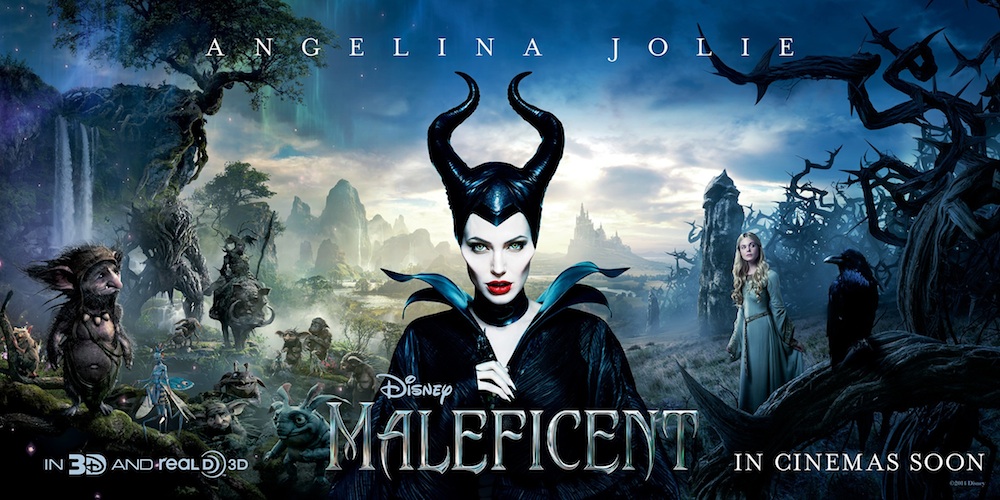
MALEFICENT

 
Publicity poster for Maleficent (© Robert Stromberg/Walt Disney Pictures/Roth Films/Walt Disney Studios Motion Pictures – reproduced here on a strictly non-commercial Fair Use basis for educational/review purposes only)

Many months previously, knowing that I've always been a massive Disney fan, a friend lent me her DVD of the movie Maleficent, which on 7 April 2017 I finally got around to watching. It's the Disney live-action reworking of their sumptuous animated feature film Sleeping Beauty, released in 1959 and based upon the classic Charles Perrault fairy tale 'La Belle au Bois Dormant'.

A dark fantasy film directed by Robert Stromberg, and released by Walt Disney Studios Motion Pictures in 2014, Maleficent provides a back story for the eponymous wicked fairy that is wholly original in every sense! For according to this retelling, Maleficent is evil only because she had previously been grievously betrayed by her human lover – none other than the youth who would in time become King Stefan (father of the future Sleeping Beauty, Princess Aurora), who cuts off her wings while she is asleep (a controversial scene that has been interpreted in a number of different ways…).

Consequently, Maleficent is actually misused and misunderstood rather than malevolent. Yeah, right! Also, if she really did begin as a sweet, pure-hearted child and maiden, I cannot help but wonder why she had been given the name Maleficent, bearing in mind that it is derived from the Latin for 'evil-doer'…

The special effects in Maleficent are breathtakingly spectacular, as you would both imagine and expect from Disney's CGI department. However, there is only so much reworking possible with anything, and I'm sorry but in the original Perrault fairytale (in which she is called Carabosse), and especially in Disney's original animated film, which I have viewed many times down through the years from childhood onwards, Maleficent is the absolute embodiment of evil. There is not a glimmer, not the slightest scintilla, of goodness in her. Consequently, for me it was impossible to suspend disbelief and pretend that she's really not that bad after all.

Equally, as Stefan, albeit little more than a cipher in the original movie, was a good, noble character there, his wholesale conversion here into an actively malicious, black-hearted, deceitful betrayer of a young, innocent Maleficent is just too implausible, too unrealistic a transformation for me to countenance. Bending the rules is one thing, but snapping them in two and then shattering them into a myriad of shards is something else entirely, yet the latter action is, I feel, the more accurate description of this extensively-manipulated storyline's modus operandi. A sequel movie, Maleficent: Mistress of Evil, was released in 2019, but I haven't watched it so far, partly because I dread to think what further liberties with the original fairytale may have been taken in it.

Having said all of that, Maleficent is an enjoyable romp (which is why I later purchased it myself in DVD format), with a perfectly-cast Angelina Jolie portraying the title character superbly, especially in her more sinister scenes, and showcased throughout by wonderfully rich, lavish visuals. It also includes a most unexpected (albeit imho entirely nonsensical) twist upon who actually wakes Sleeping Beauty (played by Elle Fanning) with true love's kiss. The phrase "Yeah, right!" readily comes to mind yet again.

Interestingly, Princess Aurora as a child is played by none other than Jolie's own daughter, Vivienne Jolie-Pitt, having been chosen to ensure that she would not be frightened by Jolie in her role as Maleficent. And Kristen 'Twilight' Stewart had been considered for the role of the adult Aurora. Indeed, during casting for this movie, a fair few famous names came and went. For instance, the adult King Stefan is played by Sharlto Copley, but Jude Law had earlier been considered for this role, just as Judi Dench and Emma Thompson had been considered to play two of the three good fairies.

In addition, former Doctor Who actor Peter Capaldi had actually been cast and filmed in the role of Maleficent's uncle, King Kinloch, the fairy monarch of the Moors, but his scenes were cut from the movie's final version, as were those of Miranda Richardson, playing Queen Ulla, Maleficent's aunt and Kinloch's consort.

Oh yes, almost forgot: a beautiful Tchaikovsky-based song ('Once Upon A Dream', created from the Grand Waltz in the Russian composer's immortal ballet Sleeping Beauty) and the vocals of Lana Del Rey really don't go together, honestly – just sayin'...

Anyway, if you haven't seen the movie, click here to view an eye-popping trailer for Maleficent.

And to view a complete listing of all of my Shuker In MovieLand blog's other film reviews and articles (each one instantly accessible via a direct clickable link), please click HERE! 

A meeting with Maleficent! (© Dr Karl Shuker)


Saturday, May 15, 2021

IMAGINAERUM: THE OTHER WORLD

 
Publicity poster for Imaginaerum: The Other World (© Stobe Harju/Solar Films/Caramel Films/Scene Nation – reproduced here on a strictly non-commercial Fair Use basis for educational/review purposes only)

Having purchased it in DVD format earlier that day, during the evening of 2 May 2021 I watched one of the most extraordinary movies that I have ever seen. A joint Finnish-Canadian production entitled Imaginaerum: The Other World, it was part-dream, part-nightmare, part-fantasy, part-fading memories of a dying mind, and wholly spellbinding in its melancholy majesty and magic.

Directed by Stobe Harju, and released in 2012, Imaginaerum is the extraordinary cinematic brainchild of Finnish symphonic metal band Nightwish, who perform in several musical segments throughout this film and have released an accompanying eponymous concept album. No Hollywood stars appear in Imaginaerum, but this is fitting, because the movie itself is the star here.

Replete with flashbacks and potentially baffling albeit beautiful phantasmagorical imagery, the storyline of Imaginaerum is intricate and by no means easy to follow, especially upon first viewing, unless you have read anything about it in advance. As this happens to be a movie that I had indeed read about earlier (after having seen its DVD once before, a year or so ago, but failing to buy it back then as I wasn't at all sure what to make of it from its cover's description), I was thankfully equipped with a basic knowledge of what to expect, which proved exceedingly useful.

I have seen Imaginaerum billed as a Tim Burtonesque movie, but in my view it is much more mesmerizing yet far less macabre than his general output. Having said that, it does feature some seriously sinister, fright-inducing clowns, plus the most hideous, terrifyingly evil snowman that I have ever seen. The morbid fear of clowns has its very own official term, coulurophobia. After watching this movie, I feel very emphatically that there should also be one for the morbid fear of snowmen, for if you weren't suffering from it beforehand, you may well be afterwards! And in fact there is such a term, chionoandrophobia – so now you know!

As for this movie's inordinately intricate plot: here is my valiantly attempt to unravel and summarise it.

SPOILER ALERT: If you do not want to know the plot of Imaginaerum, read no further.

 
Nightwish's 'Imaginaerum', their seventh studio album (© Nightwish/Scene Natio Oy/Sony Music/Nuclear Blast/Roadrunner Records – reproduced here on a strictly non-commercial Fair Use basis for educational/review purposes only)

It begins with a young woman, Gem, at the hospital bedside of her elderly father, Thomas Whitman, a former musician but now in a coma due to advanced dementia. Gem has been estranged from him since childhood, as he has always seemed so distant and disinterested in her. Meanwhile, comatose Thomas's mind has regressed into a dark fantasy world where he is once again a child, a young orphan at the orphanage where he grew up, along with his friend Ann, after his mother had died and his father had placed him there.  Playing for a while one evening with seemingly his only notable possession, a snow globe containing a dancing lady, Arabesque, he hears someone calling to him from his shuttered window, and when he opens the window, floating outside is the afore-mentioned frightening snowman, who calls himself Mr White and offers to take Thomas flying through the sky with him.

However, you can forget any similarity with the famous 'Walking In The Air' scene from the classic cartoon version of Raymond Briggs's children's story 'The Snowman'. Here in Imaginaerum, Mr White takes Thomas on a wild and scary aerial journey, in which they chase after Thomas's airman father Theodore's plane, before Thomas eventually falls precipitously to earth, where he encounters a broken-down rollercoaster track symbolizing his failing mind, and a mechanic symbolizing his physician who states that it is beyond repair. Gem is also there, as a young girl, who agrees with the mechanic, symbolizing her adult lack of empathy and sympathy for Thomas as her elderly father. Thomas also meets an elderly Ann, who warns him that Mr White is evil and not to be trusted.

After entering a house where a spooky musical/circus performance is taking place, featuring creepy clowns aplenty, Thomas enters a room where his father Theodore is sitting, only to see him shoot himself dead. An older Thomas is also present, who smashes the younger's snow globe, which symbolizes the older, traumatised Thomas becoming distant from Gem.

The story then switches back into the real world, where Gem has left the hospital and returned home, only to find the now-elderly Ann there. Ann turns out to have stayed friends with Thomas throughout their lives, becoming a member of his band, and the source of much resentment from Gem, who feels that Thomas was more interested in Ann than in her, his own daughter. However, Ann explains that Thomas's father, Theodore, had always been very distant and cruel to Thomas, causing him so much unhappiness that Thomas became determined not to be the same toward his own child, Gem. Tragically, however, his fear led him to pull away from her and, as a result, precisely what he'd tried to avoid duly took place – an estrangement between him and Gem that Gem had never been able to understand, until now – never having previously realized just how much he did, and still does, love her. Gem then finds a trunk containing many sheets of paper upon which Thomas had written in the form of an intricate pattern as many of his thoughts and memories as possible before his dementia took them from him. And as Gem attempts to arrange them in their correct form, she discovers more proof of his love for her.

Gem and Ann drive back to the hospital, during which time in his dying mind's fantasy world Thomas finally realizes that the malevolent Mr White represents his baneful father, Theodore. So he flees on the rollercoaster, relinquishing the snowman and therefore the bitter memories of Theodore that it embodies, and holding on to his last memories of his daughter Gem instead. Thomas opens his eyes, back in the real world at last, and sees Gem standing beside him. They make their peace, then Thomas closes his eyes for the last time, passing away in the knowledge that his daughter now recognises that he did love her, very much. There is a very poignant final scene that takes place when Gem returns home, featuring her late father's Arabesque snow globe, but I'll leave you to discover that for yourself.

Imaginaerum is appositely entitled – a haunting but fascinating exploration and depiction of human imagination, a veritable dream captured on celluloid forever.

If you would like to experience a fleeting foray into the rarefied 'other world' of Nightwish's Imaginaerum, be sure to click here in order to watch an official trailer for this dark yet truly mesmerizing movie.

And to view a complete listing of all of my Shuker In MovieLand blog's other film reviews and articles (each one instantly accessible via a direct clickable link), please click HERE! 

 
Mr White, one seriously sinister snowman, meeting the young Thomas at the orphanage (© Stobe Harju/Solar Films/Caramel Films/Scene Nation – reproduced here on a strictly non-commercial Fair Use basis for educational/review purposes only)


Saturday, May 1, 2021

SHADOW OF DEATH (aka DESTROYER)

 
Front cover and spine of my official ex-rental big box VHS video of Shadow of Death (aka Destroyer) (© Robert Kirk/The Movie Store (TMS Pictures)/Sony Videos – reproduced here on a strictly non-commercial Fair Use basis for educational/review purposes only)

As far as the world of hiring out videos from video rental shops was concerned, I was something of a late starter, inasmuch as by the time that I'd begun to frequent them on a regular basis during the 1990s, many local video shops here in the UK had already begun to close, and even the mighty Blockbusters chain store with numerous video shops the length and breadth of Great Britain as well as far beyond was fast approaching its sell-by date. Consequently, I never got around to renting out many of the videos that were once so commonly available. What makes matters far worse, however, is that a considerable number of these latter videos proved to be only available in big box, rental format, never being rereleased in the small box sell-thru video format that was available for purchase in general shops and department stores.

This meant that once the video rental shops began closing, it was well worth turning up to their closing-down sales where their now ex-rental videos could be purchased at bargain prices, and this is indeed what I did on many occasions, enabling me to buy movies that I would never otherwise be able to obtain and view (or at least not back in those pre-internet/YouTube days). I've already reviewed some of my ex-rental exotica here on Shuker In MovieLand, and tonight I watched another one.

Directed by Robert Kirk, and released in 1988, here in the UK it was entitled Shadow of Death, but in the USA it was entitled Destroyer. This was one of those big box-only movies that I'd seen so often in the video rental shops but had never got around to hiring out – nor did I ever see it in any video rental shop's closing down sale. And as I couldn't even remember its title, it seemed doomed to be of those films that had got away, never to be found again, let alone watched, by me. Last year, however, while browsing down lists of ex-rental big box videos for sale online, I saw its very distinctive cover, and in so doing discovering its title at long last. My first attempt at purchasing a viewable example with a cover in decent condition failed on both counts, but after obtaining a refund I had better success second time round.

Although I've seen Shadow of Death described elsewhere as a slasher (a genre that has never appealed to me), I can safely say that except for just a couple of extremely brief scenes, there is nothing gory about it at all. Indeed, for the most part it is much more a comedy horror/thriller than anything else (especially during the first half), added to which is an intriguing albeit never-elucidated sci fi/fantasy aspect (see later for details). This movie's two principal stars are ex-NFL American footballer turned actor Lyle Alzado and none other than Mr Psycho himself Anthony Perkins in one of his last film roles (Perkins replacing Roddy McDowall in this role at short notice).

The basic premise of Shadow of Death is that Ivan Moser (played by Alzado), an extremely powerful, wholly remorseless serial killer who is known to have raped, tortured, and murdered 24 men, women, and children, is about to be executed via the electric chair inside the prison where he is being held. He is strapped into it securely, the black hood is placed over his grinning face, and the lethal switch is pulled to its maximum extent, sending intense electrical pulses surging through his body – whereupon the prison's entire electrical system abruptly shorts out.

Fast-forward 18 months, and a movie crew has been granted permission by the authorities to film inside this now long-abandoned prison, which was closed down after a murderous onslaught had taken place there after the electrical shorting, as this had enabled the convicts to break out of their cells and go on the rampage.

The movie crew is headed by Robert Edwards (Perkins), a somewhat sleazy, immoral director of cheap, low-budget exploitation flicks. This particular one, Death House Dollies, has been written by enthusiastic writer and aspiring investigative journalist David Harris (Clayton Rohner) who hopes somewhat improbably that it will actually lead to bigger and better assignments for him. Assisting David and the other crew members on site inside the prison is his girlfriend Susan Malone (Deborah Foreman).

 
Clayton Rohner as aspiring screenwriter/journalist David Harris in Shadow of Death (© Robert Kirk/The Movie Store (TMS Pictures) – reproduced here on a strictly non-commercial Fair Use basis for educational/review purposes only)

SPOILER ALERT – if you don't want to know what happens further in this movie, stop reading right now!

What none of them realize, however, is that this ostensibly deserted, defunct prison is not entirely deserted after all. Due to some mysterious, hitherto-unsuspected genetic capability possessed by him, Moser had actually survived his supposedly lethal embrace by Old Sparky there. However, the electricity sent pouring through him had turned him into a rampaging 'half-alive' monster of a man (think bargain-basement Hulk), even more psychopathic than before, but it had also gifted his body with the ability to heal any wounds or injuries inflicted upon him, regenerating his flesh fully and fast. (It was this particular plot line in Shadow of Death that had induced me to watch it, as I was interested to see how it would play out.) Helping to keep Moser's existence in the prison concealed from everyone is his father, Russell (Tobias Anderson), who is employed there as a guard to keep out vagrants and prying eyes.

Needless to say, it's not long before the monstrous but very mighty Moser begins surreptitiously picking off the film crew one by one, killing them in a variety of seriously unpleasant ways, until only David and Susan are left standing (barely). And just to add to their problems, Russell is also on the loose, with intentions upon them that are no less evil than those harboured by his ferociously feral offspring, whose regeneration capabilities frustrate their ever more desperate attempts to disarm and destroy him. Do they escape? Now that would be telling!

The massively muscular Alzado plays Moser with eyes-a-bulging ultra-violent malevolence that never falters for an instant. If Hercules had gone over to the dark side, this is what he would have looked like and how he would have behaved, unquestionably. True, at times his pumped-up, pent-up fury becomes not so much animated as animation, like a Manga villain made flesh, but as Shadow of Death is certainly not a movie to be taken even remotely seriously, this doesn't really matter.

Perkins as Edwards is given some delightfully dry one-liners, and no doubt felt right at home here because this movie features not one but two shower scenes! Perhaps the most interesting character is Rohner's David, who gamely takes on the cool, obligatory leather-jacketed action-hero role, albeit with stand-out and-up hair that probably required so much aerosol spray to keep it in place that it can lay claim to its very own hole in the ozone layer. Nevertheless, it is Foreman's Susan who is responsible for most of the actual action, running around at the slightest provocation and being constantly chased for almost the entire second half of the movie by the increasingly tiresome but never-tiring Moser. Disappointingly for me, the scientific reason behind his freakish survival ability is never explored or explained in any way – he just has it, end of story.

Shadow of Death is one of those movies that is sufficiently entertaining for you to keep watching it until the end, but which leaves little if any impression afterwards. Nevertheless, for me it embodied a memory retrieved from those long bygone days of video rental shops that I used to enjoy visiting so much. Hence I'm glad to have watched it tonight, and also to own it at long last, residing now alongside those varied other ex-rental big box movies that I've enjoyed tracking down over the years, yet whose very existence is quite probably unknown to most people, especially younger film fans, for whom the past – including its vista of video rental shops – is indeed a foreign country, where they definitely do things differently.

Having said that: in 2016, under its American Destroyer title, Shadow of Death was re-released in double-feature Blu Ray format, twinned with Edge of Sanity from 1989 (and also starring Perkins), but featuring its American cover artwork rather than its much more iconic Shadow of Death UK illustration that is still so fondly remembered here by ex-rental video aficionados.

If you'd like to watch an official trailer for Shadow of Death, please click here to view one on YouTube. The entire movie is also available to buy or rent there.

And to view a complete listing of all of my Shuker In MovieLand blog's other film reviews and articles (each one instantly accessible via a direct clickable link), please click HERE! 
 
Publicity poster for this movie's American Destroyer entitled-incarnation (© Robert Kirk/The Movie Store (TMS Pictures) – reproduced here on a strictly non-commercial Fair Use basis for educational/review purposes only)